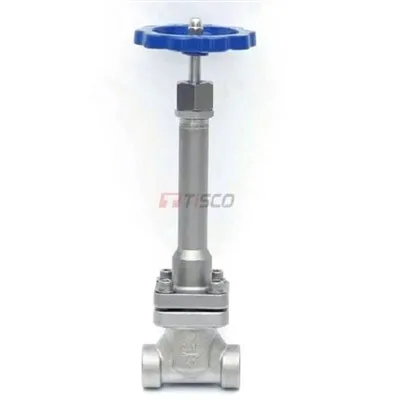
In the oil and gas industry, many important equipment are required to control the production of oil or gas wells. The most critical one is the Christmas tree valve, which is named after its appearance with many valves and pipelines, resembling a decorated Christmas tree.
Core component modules
Casing Head
Installed at the bottom of the wellhead, connecting the surface casing with the technical casing, supporting the weight of the casing string, sealing the annular space of each layer of casing, providing an installation foundation for the upper device, including casing tees, casing valves, etc.
Key components: casing four-way, casing valve, sealing components, flange/clamp connectors.
Tubing Head
Located above the casing head, it suspends the wellbore tubing string and carries its weight, seals the annular space between the tubing and casing, and includes tubing hangers, tubing tees, etc.
Key components: tubing hanger (sealing tubing and casing annulus), tubing tee (connecting tubing and Christmas tree body), upper flange, sealing box/top screw.
Christmas Tree Body
The valve and fitting assembly above the oil pipe head controls oil and gas production, testing, operation, and emergency shutdown. It is named after China National Petroleum Corporation (CNPC) due to its multi wing valve layout resembling a Christmas tree.
Accessories
Pressure gauges, temperature sensors, sampling valves, vent valves, chemical injection valves, blowout preventers, Christmas tree caps, etc. are used for monitoring, sampling, maintenance, and operational support of China National Petroleum Corporation.
Typical structural example (taking the land biplane Christmas tree as an example)
Installation sequence: casing head → casing valve → tubing head (tubing hanger+tubing tee) → upper flange → main valve → tubing tee → double wing valve → wax removal valve → throttle valve → pressure gauge/sensor → Christmas tree cap.
Core process: Oil and gas flow out of the oil pipe → Main valve → Oil pipe four-way → Wing valve → Throttle → Outbound pipeline; The wing valve can switch between production/testing/venting, and the wax removal valve is used for underground operations by China National Petroleum Corporation.
Working Principle:
The core working principle of Christmas Tree is to achieve precise control of wellhead pressure and flow rate of oil and gas wells through graded sealing, valve regulation, and safety interlocking, ensuring stable transportation of oil and gas from downhole tubing to surface gathering and transportation systems, while also responding to production abnormalities and meeting various downhole operation needs.
The workflow and principles can be divided into the following core steps:
Wellhead sealing and bearing capacity
The casing head and tubing head of the Christmas tree bear the basic sealing and load-bearing functions. The casing head seals the annular space of each layer of casing to prevent the leakage of formation fluids; The tubing head hangs the downhole tubing string and seals the annulus between the tubing and casing to prevent oil and gas from overflowing from the annulus, providing a sealed foundation environment for subsequent fluid control.
Fluid transportation and flow control
The downhole oil and gas flow upward through the tubing, first passing through the lower and upper main valves of the Christmas tree body (the two main valves are designed with safety redundancy to ensure the controllability of the main channel), and then entering the four-way of the Christmas tree.
Subsequently, the fluid can be distributed to the production pipeline through wing valves, which can adjust the opening degree to control the oil and gas output flow rate; At the same time, the throttle (oil nozzle) will stabilize the wellhead pressure and production through flow restriction according to production needs, preventing damage to surface equipment due to high pressure or sand production in the formation due to low pressure.
Implementation of homework and testing functions
When wax removal, downhole testing, chemical injection and other operations need to be carried out, the wax removal/testing valve can be connected to the anti spray pipe or testing equipment to complete the operation without affecting the main production process; Chemical injection valves can inject corrosion inhibitors, scale inhibitors, etc. into the wellbore to ensure stable production of oil pipes and formations.
Safety interlock and emergency shutdown
The surface safety valve (SSV) equipped on the Christmas tree is the core safety component. When the wellhead pressure and flow rate are abnormal (such as overpressure, leakage), or when a remote shutdown signal is received, the safety valve will automatically or manually close quickly, cutting off the fluid channel and preventing safety accidents such as blowouts.
In addition, the vent valve can safely release the remaining pressure and fluid in the well during maintenance or emergency situations, ensuring the safety of personnel and equipment.
Control of annular pressure
The reserved annular interface between the casing head and the tubing head can be connected to a pressure gauge to monitor the annular pressure. If necessary, a balancing fluid or pressure relief can be injected through the annular valve to maintain stable annular pressure and prevent damage to the casing due to excessive pressure difference between the inside and outside.
The future development trend of Christmas trees
The Christmas tree is evolving towards five directions: intelligent autonomy, extreme working condition adaptation, modular low intervention, green and low-carbon, and global standard coordination. The core is to improve safety, efficiency, and economy in complex oil and gas development, and reduce environmental impact. The following are specific trends and key points:
1, Core Technologies and Product Trends
Intelligence and autonomy: remote unmanned/unmanned operation
Sensor+edge computing+AI deep integration realizes real-time monitoring, fault prediction and automatic regulation of pressure, flow, vibration, corrosion and other parameters, and reduces the frequency of manual intervention and workover.
The popularization of electro-hydraulic/fully electronic remote operation system for underwater oil trees supports real-time production optimization and emergency shutdown, significantly reducing the cost of offshore operations.
Data driven digital twin applications enable virtual debugging, condition reproduction, and lifespan prediction, improving operational efficiency.
2. Extreme working condition adaptation: high pressure, high temperature and deep-sea environment
High pressure and high temperature (HPHT) and the demand for ultra deep wells are driving material upgrades, such as super duplex steel, nickel based alloys, and tungsten carbide seals, which can withstand working conditions of 177 ℃+and 105MPa+and are suitable for shale gas and deep oil and gas development.
The underwater oil tree is expanding towards ultra deep water (3000m+), adopting dry docking, modular assembly, and long-life design, suitable for low temperature, high pressure, and corrosive environments on the seabed.
3. Modularity and Low Intervention: Cost Reduction, Efficiency Enhancement, and Rapid Deployment
Standardized module design, supporting rapid assembly, replacement, and upgrade, shortening on-site installation and maintenance cycles, and reducing inventory and operation costs.
Integrated manifold, valves, and instruments, reducing on-site connection points and improving sealing reliability and leak resistance.
Extend the maintenance free period (target 5-10 years), adopt long-life sealing, intelligent anti-corrosion monitoring, and online chemical injection to reduce the frequency of underwater interventions.
4. Green, Low Carbon, and Sustainable: Carbon Reduction Throughout the Whole Life Cycle
Low leakage design (API 6A low emission certification) and carbon capture and utilization (CCUS) interface to reduce methane emissions.
Renewable energy sources (offshore wind power, photovoltaics) supply power to platforms/underwater control systems, reducing dependence on fossil fuels.
Material recycling and lightweight design reduce carbon emissions during manufacturing and transportation stages.
5. Standards and Supply Chain: Global Collaboration and Localized Balance
Unified standards such as API 6A/17D and ISO 13628 promote component exchange and global procurement, reducing supply chain risks.
The rise of regional manufacturing centers (Asia Pacific, Middle East), balancing technology introduction and local adaptation, shortening delivery cycles, and improving service response speed.
summary
The Christmas tree is transitioning from traditional mechanical control to a digital system of "intelligent perception autonomous decision-making remote execution". While meeting complex working conditions such as high pressure, high temperature, and ultra deep water, it also balances green, low-carbon, and economic benefits, becoming a core equipment for efficient, safe, and sustainable development in the oil and gas industry.